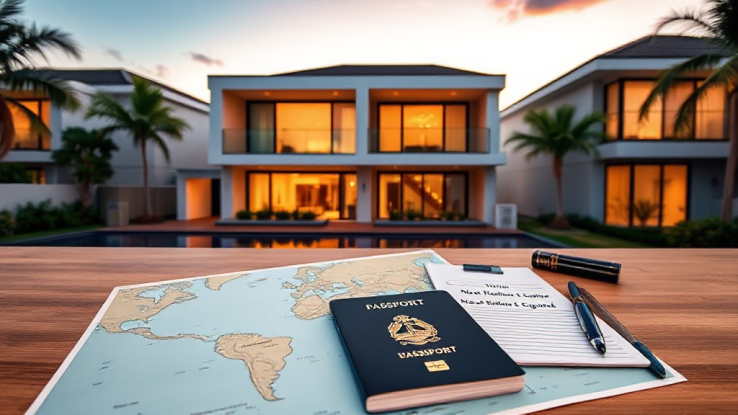
This Week: The Vanuatu Real Estate Option
Welcome back, subscribers. This issue rounds up the key points about the real estate route to Vanuatu citizenship and what it means for applicants who prefer not to relocate. If you have been weighing a second passport, the details below are worth a scan.
The headline is simple: Vanuatu’s citizenship programs are generally structured so that you do not need to live in Vanuatu to qualify or to keep your citizenship. For a full breakdown of how that works, the team at https://benefitsofvanuatucitizenship.com/no-residence-needed/ has a clear explainer. Here are the five items we think matter most this week.
Item One: No Physical Residency Is Required
The core appeal of this route is straightforward. Applicants can complete the process without moving to the islands, maintaining a home there, or spending a set number of days in the country each year. No residence requirement means no relocation clock and no minimum stay.
That matters for professionals, retirees, and business owners whose lives are anchored elsewhere. You can hold the citizenship while continuing to live and work in your current country. The program is designed around a contribution or investment, not around physical presence.
What “No Residence” Actually Covers
It covers the application stage and the post-approval stage. You are not expected to establish a permanent address in Vanuatu, and there is no annual visit quota tied to keeping the status. Always confirm current rules with the official program documentation, since immigration policies can be updated.
Item Two: The Real Estate Angle and How It Fits
Real estate is one of the investment options sometimes discussed in citizenship-by-investment contexts. In Vanuatu, the key point for readers is that the no-residence feature applies regardless of which qualifying option you choose. You are not buying a home because you must live in it.
This is where many applicants get confused. They assume a property purchase implies a lifestyle move. In practice, the property or investment is a qualifying route, not a mandatory address. The citizenship and passport benefits remain the objective, and your day-to-day life can stay where it is.
Common Misunderstandings
- Assuming you must rent or buy a home in Vanuatu to apply.
- Believing you must spend part of each year on the islands.
- Thinking the passport is tied to a local residential address.
None of these are accurate for the standard no-residence pathway. Verify specifics with the program’s current guidelines before committing funds.
Item Three: Family Inclusion and Dual Citizenship
Another point subscribers ask about is family. Vanuatu citizenship programs typically allow a spouse and dependent children to be included in the same application, which keeps the process efficient for households. Family members can usually be added under one application, subject to eligibility checks.
Equally important: Vanuatu generally permits dual citizenship. That means you do not have to surrender your first passport to take up Vanuatu citizenship. For many applicants, this is the deciding factor, because it preserves existing travel access and legal ties at home.
Why Dual Citizenship Matters
Holding two passports can simplify travel, provide a backup plan, and support long-term mobility planning. Because no residence is required, the second citizenship becomes a portable asset rather than a relocation project. Again, confirm the rules in your home country, as dual citizenship acceptance varies by jurisdiction.
Item Four: Travel Access and Recent Changes
The Vanuatu passport is known for offering visa-free or visa-on-arrival access to a range of destinations, though the exact list changes over time. Travel access should be checked against the latest official updates, not older marketing material. Recent years have seen adjustments to passport rankings and entry agreements, so due diligence is essential.
This is also where the no-residence benefit compounds. You gain a second travel document without uprooting your life. For frequent travelers, that can mean fewer visa queues and more flexibility, but it is not a substitute for checking each destination’s current entry rules before booking.
What to Verify Before Applying
- The current visa-free list for the Vanuatu passport.
- Any recent changes to the citizenship program’s requirements.
- Processing timelines and document requirements.
Item Five: Practical Steps and Trade-Offs
If you are considering this route, start with the official program information and a reputable advisory source. The process usually involves eligibility checks, document preparation, a contribution or qualifying investment, and background screening. No residence requirement does not mean no due diligence; applicants are still vetted.
Trade-offs exist. Costs, processing time, and the need for accurate paperwork are real considerations. The no-residence feature removes relocation friction, but it does not remove the need for careful planning. Budget for professional guidance and confirm every figure directly with the program or a licensed agent.
A Quick Comparison
| Factor | Standard Expectation |
|---|---|
| Physical residency | Not required |
| Minimum stay per year | None specified |
| Dual citizenship | Generally permitted |
| Family inclusion | Spouse and dependents usually eligible |
Use this as a starting framework, not a legal guarantee. Program terms can change, and individual circumstances differ.
Closing Note
That wraps this week’s digest. The takeaway is that Vanuatu’s no-residence pathway is built for people who want a second citizenship without a second home. If you want the detailed version, revisit the explainer at https://benefitsofvanuatucitizenship.com/no-residence-needed/ and confirm current requirements before you act. Until next issue, stay informed and read the fine print.